My first memories of fruit butters are driven out of Carbondale, Illinois, which seemed worlds away from the Chicago suburbs, both in station-wagon miles and in accent.
Maybe Aunt Harriet’s slower cadences and shifts and drawls reinforced her patience for hours and hours of bubbling the moisture out of the orchard’s apples and peaches. All I know is that my first attempts about 12 years back, trying to cram the process into a few precious free hours between business trips, were miserable failures that tarred at least one pot so thoroughly it went straight into the trash bin.
The key, I now know, is to take things low and slow. Try a very low oven—250º or even less—for 3-4 hours. Or on the stovetop over the lowest flame you can manage. Or in a slow cooker overnight.
Whichever way you go—and with whatever fruit you use (I’ve done apples, peaches, blueberries, cherries, rhubarb, and now Asian pears)—know that there’s one way that “slow” doesn’t apply to fruit butters. Even though the added sugar gives, say, apple butter, a longer shelf life than applesauce, butters generally have way less preservative sweetener than jams or jellies, so once you open a jar, try to finish it off within a few months.
Asian Pear Butter
Adapted from my mom’s apple butter recipe, which I think is probably from “Aunt” Harriet Ross, who, with her husband, Arthur, tended a huge garden behind their home near the Southern Illinois University. If you thought Chinese Long Beans were a recent, artisan-fad thing, think again. Art was growing them in the late ’60s.
- 10-12 large Asian pears (roughly 5 lbs)
- about 2-1/2 cups granulated cane sugar
- 1-1/2 cups water or cider
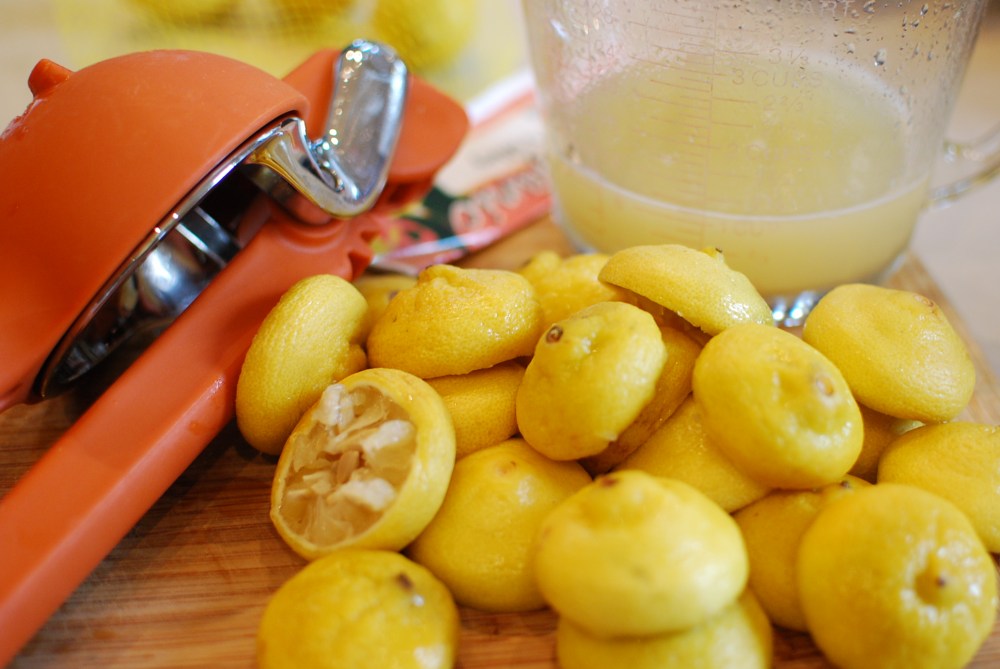
- 1 cup fresh lemon juice
- 2 inches ginger root, peeled and cut into 1/4″ pieces
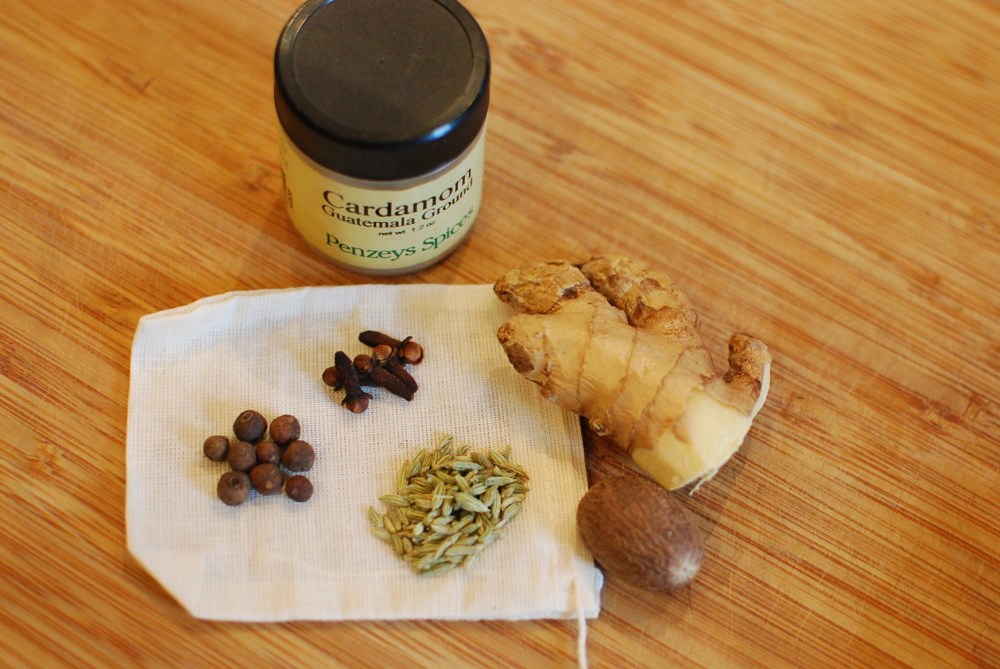
- 1 star anise (or bag of other spices—I used a combo of fennel, cloves, and allspice)
- 1/4 tsp ground cardamom
- 1/4 tsp ground nutmeg
- 1/4 tsp ground cinnamon
1. Wash the pears and cut them into like-sized chunks. If you have a food mill or chinois (or even a potato ricer), there’s no need to peel the pears first. In fact, it’s better if you don’t, since the skins and seeds have natural pectin that’ll help your spread achieve a firmer set. If you don’t have a mill, though, you’ll probably want to peel and core everything first.

2. Load the pears into a large pot. Add the water and lemon juice, then the star anise (or spice bundle) and ginger. Simmer, covered, for about a half an hour, until the pears are good and soft.
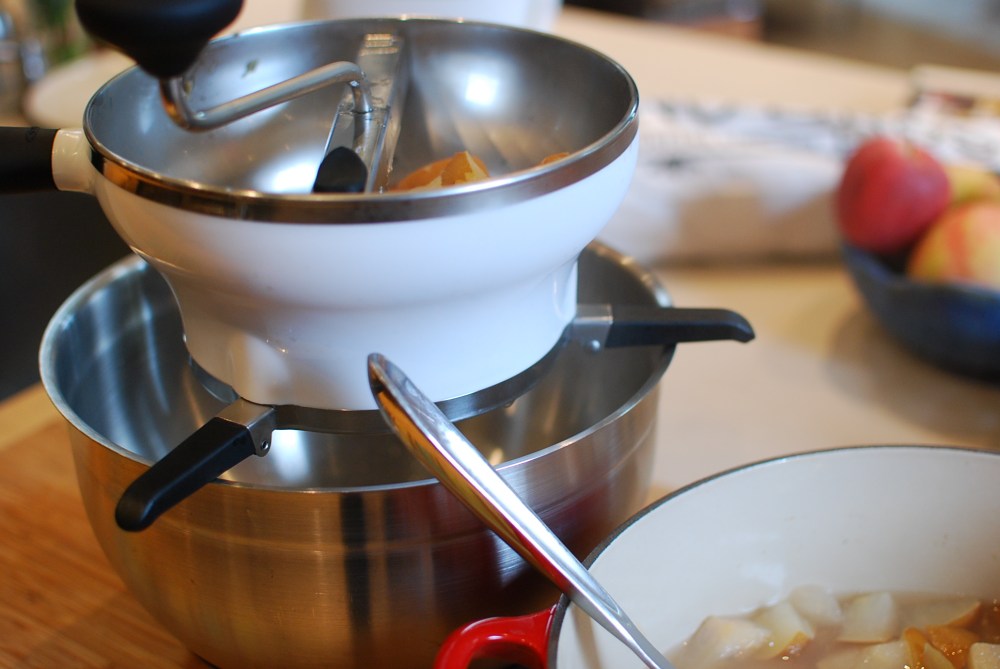
3. Remove the pot from heat. Fish out and discard the star anise/spice bundle. Position your food mill or chinois over a large bowl (if you can set up near the sink or compost bucket, do so). Scoop a few ladles of the pear solids into the mill, and press them through. Discard the solids (skins, seeds, etc.) and repeat with the rest of the pear chunks. Pour any liquid remaining in the pot through, too. If you’re mill-less, you cored and peeled ahead of time, so just smash everything up at this point with a potato masher or an immersion blender.
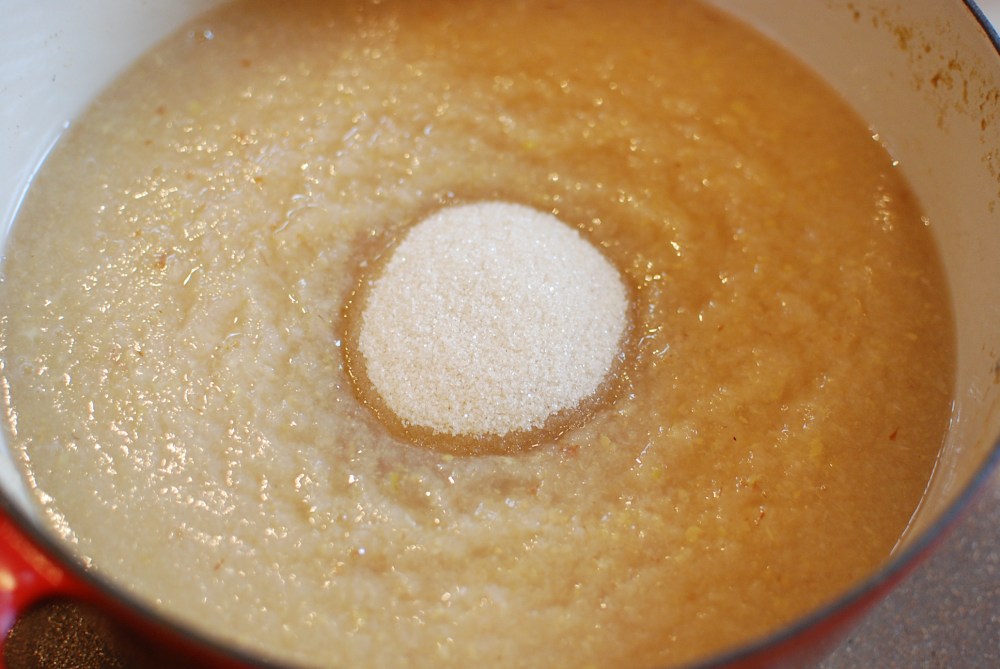
4. Rinse out the original pot (there’s probably a yucky ring from the skins). Measure the purée and then put it back in the pot. Add one-third as much sugar as you have purée. I had 7-1/2 cups of fruit, so I added 2-1/2 cups of organic sugar. Sprinkle in the cardamom, nutmeg, and cinnamon. Stir to combine. Now’s a good time, before you get cooking, to put a small plate in the freezer.
5. Cook over low heat until the purée is very thick and and the sugars have caramelized dark brown. Stir frequently so it doesn’t scorch. When you think it’s close, taste and adjust the spices, then test the consistency by dripping a little of the spread onto that plate you tucked into the freezer. Wait 10 seconds, and tip the plate. If it’s not runny, you’re done. My Asian pears must’ve been particularly juicy, because this step took a ridiculously long time—seriously, nearly seven hours of bubbling—way longer than apple butter usually takes.

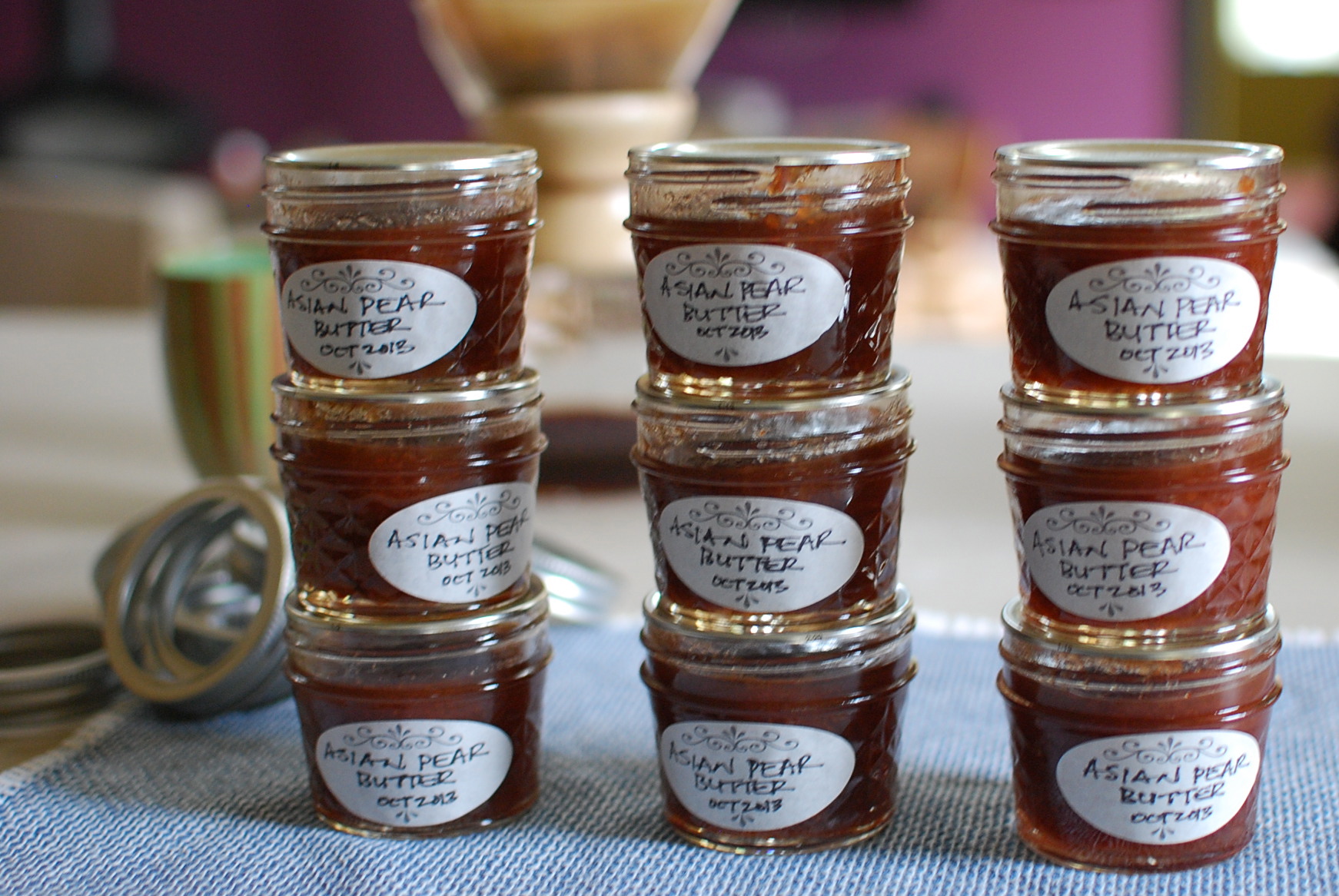
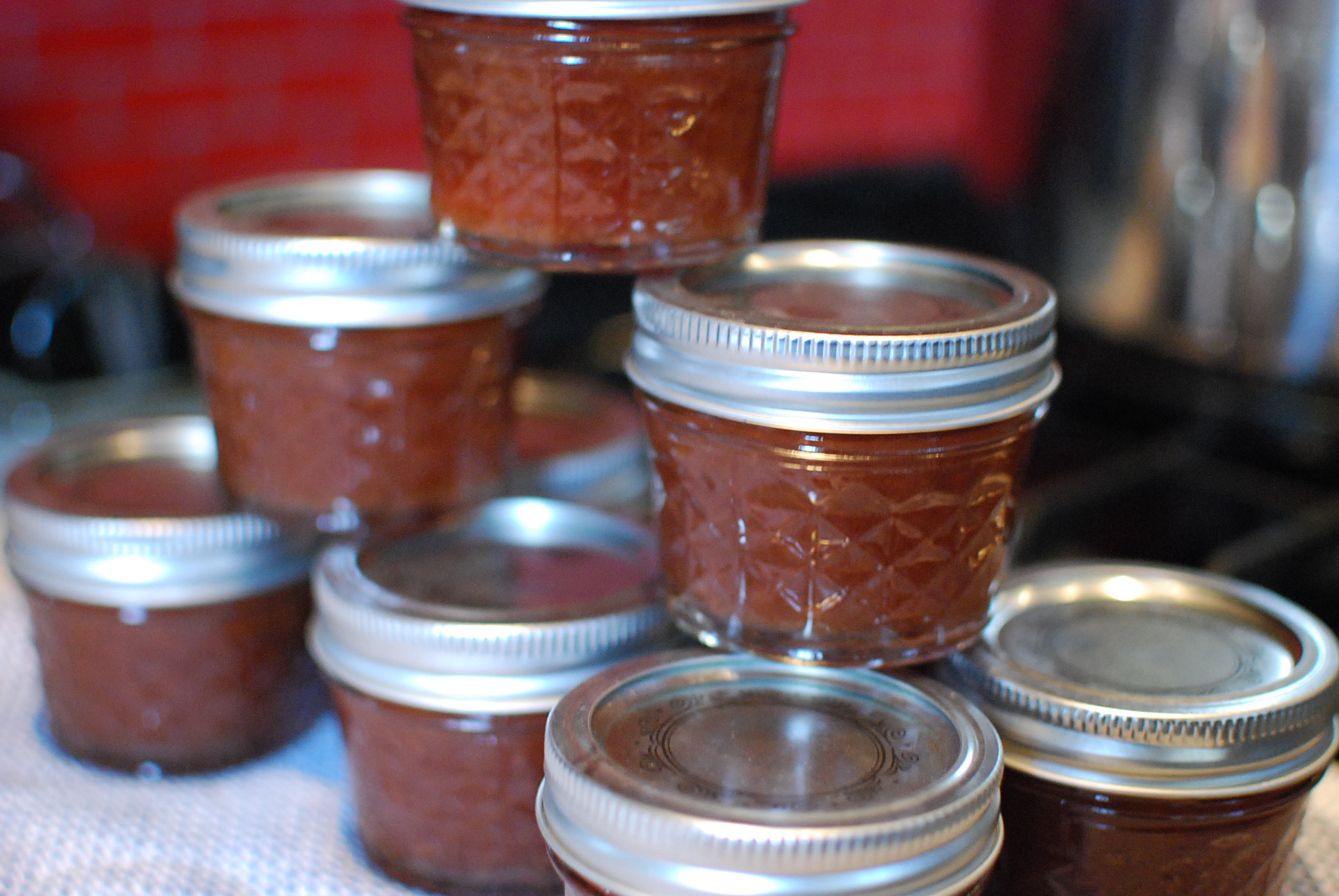
6. Ladle the preserves into sterilized jars and either cool before you refrigerate, or make shelf-stable by canning them. I ended up with 10 quarter-pint jars of pear butter. I processed 9 of them in a boiling canner bath for 15 minutes, and put the 10th in the fridge for more immediate access.
Start to finish, the process took nearly 9 hours. The wait was well worth it. But next time, I’ll use a slow cooker so I’m not tethered to the stove and a wooden spoon all day.
*** EDIT *** I’ve recently bumped up my processing time to 20 minutes to stay in line with the National Center for Home Food Preservation’s guidelines. Over the years, I’ve never had an issue with any jar of Asian Pear preserves, since I add plenty of lemon juice to balance out their low acidity, but the extra five minutes in the canner couldn’t hurt.
 Boxing Day
How nice will that be to open during our first snow storm? ENJOY!
How much lemon juice is needed if I don’t plan to can the butter?
I think it still needs some acid to brighten the flavor, but if you’re not preserving for shelf stability, you can just add it to suit your taste.
I didn’t mean for this to be a reply to Dianemenke…I was looking at the recipe on my phone and just used the comment window that was available. Feel free to edit/move!
Btw this turned out VERY sweet without acid. I added 1/4 tsp of salt to take the edge off, and I will probably add some citric acid as I don’t have much lemon juice on hand, even if I don’t can it.
Thanks, D. Looking forward to that first snow. I’m thinking a good, strong dollop on some steel-cut oats.
Asian pear sauce is NOT safe for canning. They are a low acid fruit and need acidification to be sate. The National Center for Home Food Preservation states that asian pears may only be canned as halves or slices. Asian pear puree is not safe for canning. There are no home canning recommendations available for asian pear puree. The reason is the risk of botulism in asian pear puree. Please see:
http://nchfp.uga.edu/how/can_02/fruit_puree.html
http://nchfp.uga.edu/how/can_02/asian_pears.html
Thanks for reading–and thanks for your comment, Lisa. I believe the recipe’s big slug of lemon juice provides enough acidity here, but if you want to be extra cautious, you could switch to bottled juice, which has a more consistent level than fresh. Or keep everything in the refrigerator. And obviously, toss any stored jar that has a bulging lid or whose contents smell or look funky upon opening. I’ve made at least one batch of this recipe for 4 years running. I usually put it in smaller jars, and I’ve never run into an issue. But I sure do understand and appreciate your caution.
Add lemon juice and pressure can it all …. viola, no problem ! Sounds like a delicious recipe… gonna try it tomorrow 🙂
How long should it be pressure canned, and for what size jars? If water bath canning needs 20 minutes processing time, I would think pressure canning would take just a few minutes, or more just to be safe. I wonder if it’s possible to over-process fruit butter – ?
As a follow-up, I’ve read that pressure-canning actually breaks down the pectin in jams and jellies due to the high temperatures. I only read this after I’d processed my jars (which seemed to still be set up – maybe I was lucky or all the sugar kept it gelled) but I’ll just water-bath can from now on.
From the same source: Asian pears can be canned when acidified before canning, as this recipe does with the lemon juice. https://nchfp.uga.edu/how/can_02/asian_pears.html
Thanks, Karen. Hope it worked out for you!
That link no longer works, just fyi. I’ve also wondered how/if canning fruit butter would work as it’s similar in consistency to pureed pumpkin which is not recommended at all for canning (chunks only). But obviously people do it so it must work.
Can you make this as suggested jn a slow coo kk er? Or is this recipe only for stovetop cooking?
Thanks for reading, Becka! I have indeed made this in a slow cooker since this post debuted. I had best success by propping the lid a bit with chopstick or thin wooden spoon across the top. Good luck!
I made mine in a cast iron dutch oven at 250F, cooking it for several hours until it passed the “run” test. I stirred it occasionally and it stuck to the sides a little but it never burned.
Thanks for a great recipe, I’m excited to try it. I have the same food mill. Which blade did you use? Also, I like the slow cooker idea. Which part did you slow cook?
Thanks, Carrie! Hope you love it. I used the largest plate, since everything g cooks for so long. I slow-cook the pulp on low, with the lid propped open a little with a wooden spoon. Takes most of the day. Just check and give it a stir every so often. Good luck!
Thanks for the quick response! So after you have passed it through the food mill you put it in the slow cooker?
Right. You want to reduce it pretty significantly after you separate out the skins, seeds, etc. And also, if you’re canning for longer-term storage, don’t skimp on the lemon juice. You need the extra acidity to make it safely shelf stable.
I have an enormous amount of Asian pears this year and wanted something shelf staple. The whole house smells like Christmas. The taste has the initial lemony, then spices then pear. When I make fruit butters I use the slow cooker. I then discarded the skins, seeds and used an immersion blender to get that creamy texture. Then began cooking it down. I think it is more of winter season pear butter. I do understand that lemon juice is important to add that necessary acid to make it shelf safe, but I wonder is there something that can be added to not have that initial lemon flavor? I did not add the cardamom because I am not a fan of the licorice taste. But perhaps that might help?How did everyone else’s Asian pear butter turn out? Thank you, D for sharing your recipe as this is definitely a repeat!
So glad you enjoyed this pear butter, Jennifer. You could tone down the lemon in a couple ways. I often don’t love the flavor that citric acid imparts, but it doesn’t bother many folks. If you’re among those, you can substitute 1/4 teaspoon for every tablespoon of lemon juice. Also, you can often offset the sharpness of lemon (or citric acid) by adding just a few more tablespoons of sugar. And, of course, if you’re willing to forego shelf stability, you could reduce the volume of lemon (just keep tasting for balance) and keep your jar in the refrigerator. On a side note, to use up more Asian pears, you could dispatch a whole bunch of them by making pear sauce (just like apple sauce) and freezing it. I like to load apple sauce into quart freezer bags. If you let them freeze flat (say, on a small sheet pan), you can later stand them upright, almost like albums or books, and they don’t become space hogs. Here’s my go-to sauce method: https://csaboxingday.com/2014/10/20/awesome-sauce/. Thanks for reading, and good luck!
Hi. I’m new at this.
when putting the lemon/water into the pot, it does not cover the pears completely. Only about half are immersed in water (I weighed out 5 lbs) is that still going to be enough liquid/lemon to preserve the pears safely? Are they supposed to be completely covered by water?
Thank you.
No need to cover with water. The liquid (and using a lid) just helps soften them up, so you’re going for a simmer, not a full-on poach.
No need to cover the pears completely—the liquid (and the lid) are to soften the fruit enough so you can mash it up. Hope that helps!
here goes!!! ive got lots of asian pears and plenty of ppl. to share the butter with! no one i share with ever leaves my jams/butters in the fridge very long! too yummy!
Enjoy! And thanks for reading